|
|
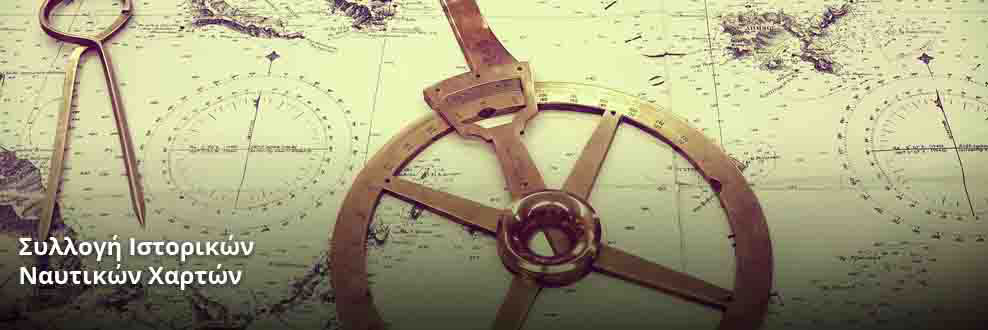
Historic Overview In 450 bC geographer Herodotus presents on a map the world as viewed by the Greeks. He depicts the Greek civilization centered around the Mediterranean Sea. To the north, east and south lie the three continents - Europe, Asia and Libya. |
|
In 325 BC, the Greek astronomer-geographer Pytheas sailed northwand to Iceland and worked out a simple method for determining latitude. Using astronomical measurements, he also proposed that the tides were a product of lunar influence. In 276 – 192 BC, Eratosthenes, a librarian at Alexandria, was the first known determiner of the world's circumference. The geographer Strabo (63 BC - AD 24) observed the volcanic activity that is characteristic of the Mediterranean area. The rhetorician Seneca (54 BC - AD 30), introduced the concept of the hydrologic cycle, part of which is the flow of the rivers into the oceans. In approximately AD 150, Ptolemy introduced lines of longitude and latitude in his map, based on the method used by Pytheas. The post-Roman Empire concept of geography, is represented by the map of the 6th century navigator Cosmas. The map depicts the Earth as a rectangle measuring 20.000 by 10.000 km.
|
|
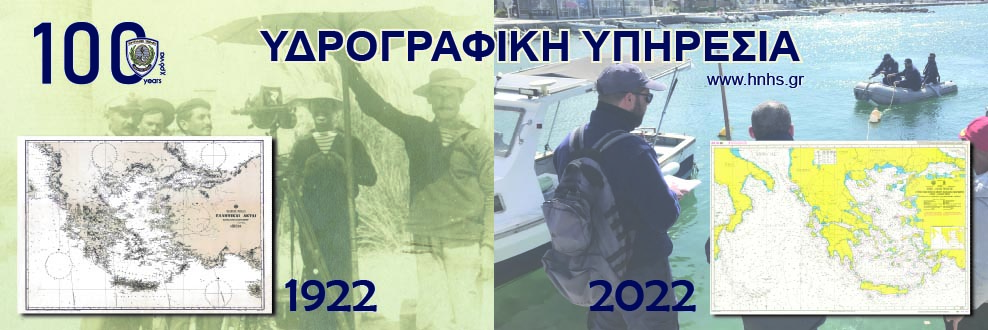
During the period 1492 - 1522, known as the Age of Discovery, the Western world came to a full realization of the vastness of the earth's water-covered surface. As a result to the Arab occupation of Constantinople, the ancient knowledge of the Greeks and Romans was carried out of that city and became available to the powers of Southern Europe. It is the period that Colombus, Magellan and other Spaniards and Portuguese tried to explore the coasts of America. 1897 Issue of the Hydrographic Handbook and teaching to the Hellenic Naval Academy by Commander M. Matthaiopoulos. 1905 Institution of a Hydrographic Office under the Hellenic Navy General Staff. 1906 The first hydrographic survey by the Hellenic Navy (Maliakos Gulf.) 1908 The first nautical chart publication by the Hellenic Navy. 1919 Foundation of the International Hydrographic Organization (IHO). Participation of Greece as founding member. 1921 The Hydrographic Service becomes an independent service of the Hellenic Navy under the Hellenic Navy General Staff. Mission of the Hellenic Navy Hydrographic ServiceThe Mission of the Hellenic Navy Hydrographic Service is the collection, elaboration and utilization of the elements and information concerning the Greek and adjacent waters in the fields of Hydrography, Oceanography, Cartography and Navigation with the aim to:
|
|
Αποστολή της Υδρογραφικής Υπηρεσίας Η αποστολή της Υδρογραφικής Υπηρεσίας είναι η συλλογή, επεξεργασία και χρήση των γεωχωρικών πληροφοριών του θαλάσσιου χώρου εθνικού ενδιαφέροντος, στους τομείς της Υδρογραφίας, Ωκεανογραφίας, Χαρτογραφίας και Ναυτιλίας με σκοπό την:
|